
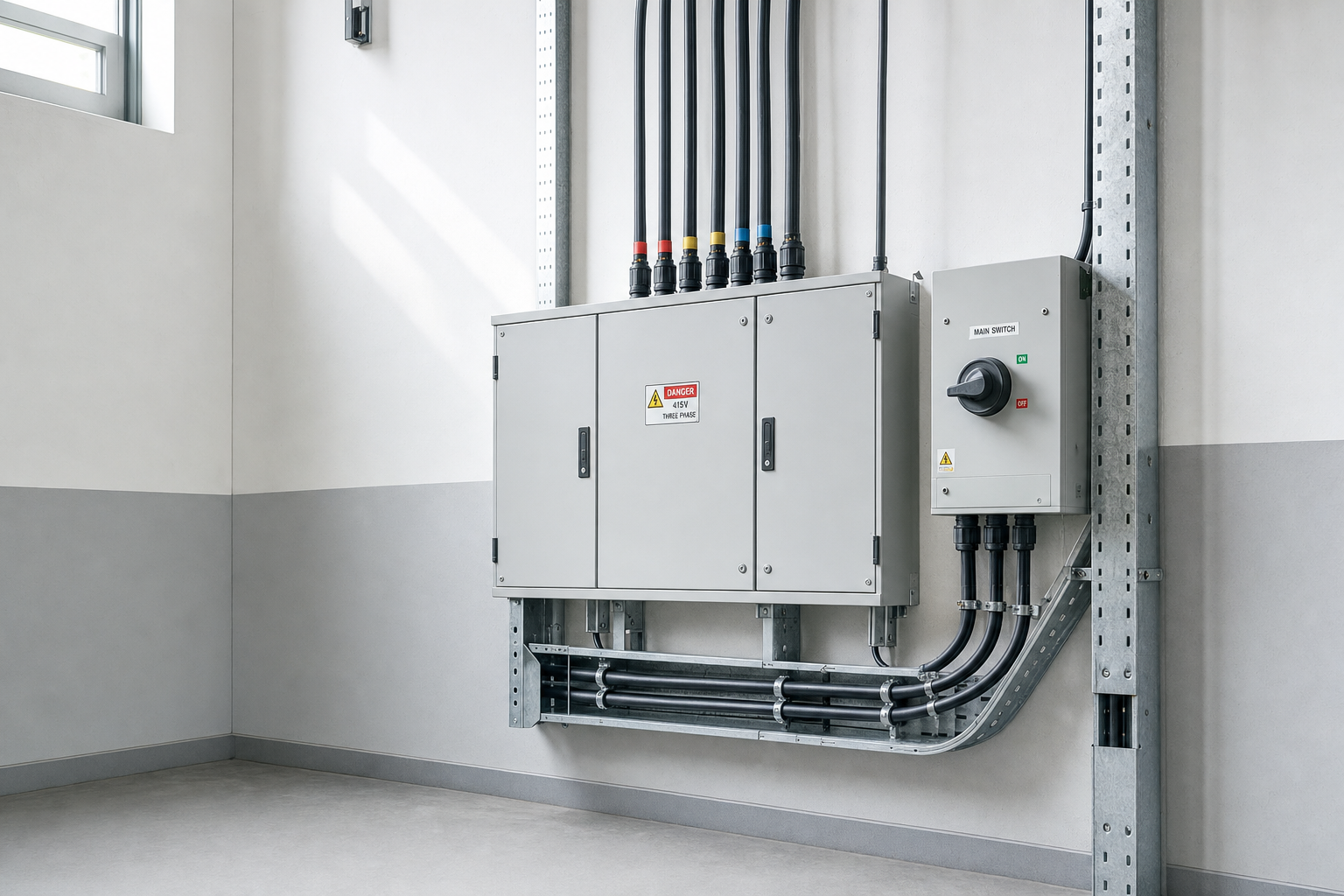
Match the supply to what the site really needs
Suited to bigger loads
Three-phase systems can better support larger commercial and industrial electrical demand.
Phases balanced properly
Load distribution matters for stable performance and should not be left to chance.
Tested and labelled clearly
Commissioning leaves a clearer picture of how the system is arranged and protected.
The right supply for heavier equipment
Three-phase power is often the sensible choice where commercial or industrial equipment demands more than a typical single-phase supply can comfortably support. The question is not simply whether a three-phase system sounds impressive. It is whether the premises, equipment and operating loads genuinely call for it. With Paul Willis Electrical Ltd, we assess the available supply, connected equipment, starting loads, distribution needs and protective devices before the installation is planned. In Bradford, that helps avoid both undersized arrangements and overcomplicated ones.
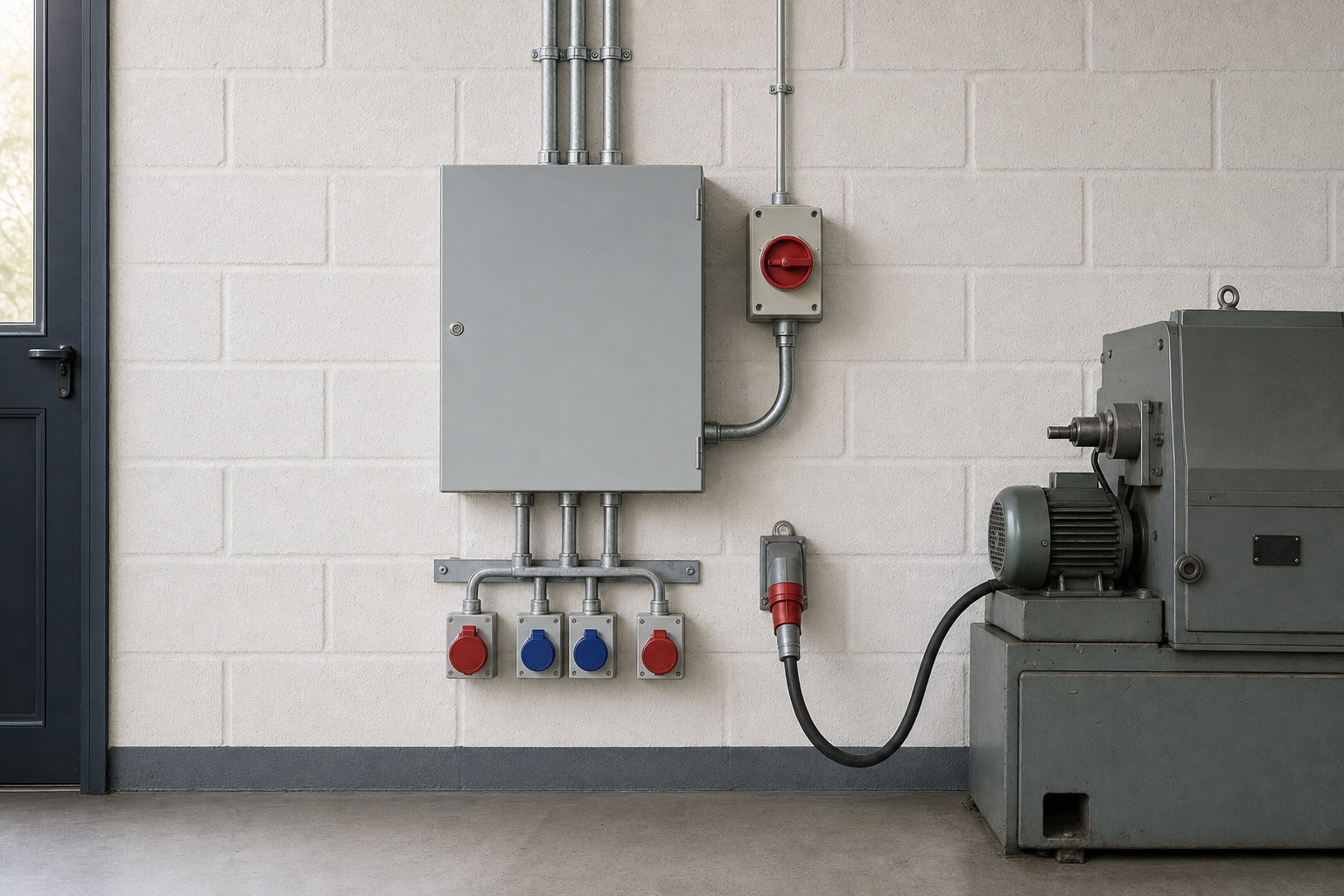
Balanced phases and a clearer layout
A good three-phase installation is not just about getting power into the building. Loads need to be distributed appropriately across phases to support stable and efficient operation, and the finished system needs clear labelling, testing and commissioning. Choosing Paul Willis Electrical Ltd means the work can move from load information and circuit design through cabling, connection and final checks in a joined-up way. This is often worth reviewing when a premises is expanding, taking on higher-demand equipment or replacing older distribution arrangements.
Frequently asked questions
When does a premises need three-phase power?
It is commonly reviewed when a site is taking on larger equipment, expanding its electrical demand or replacing older distribution arrangements. The key question is whether the connected load and type of use justify a three-phase supply.
Why is balancing loads across phases important?
Balanced loading helps support efficient and stable operation. If loads are not distributed appropriately, performance can suffer and the system may be less well suited to the way the premises is using power day to day.
What do you need to know before installing three-phase?
We need to understand the available supply, the equipment being connected, starting loads, the distribution requirements and the protective arrangements needed. That information shapes whether the installation will be suitable and how it should be laid out.