
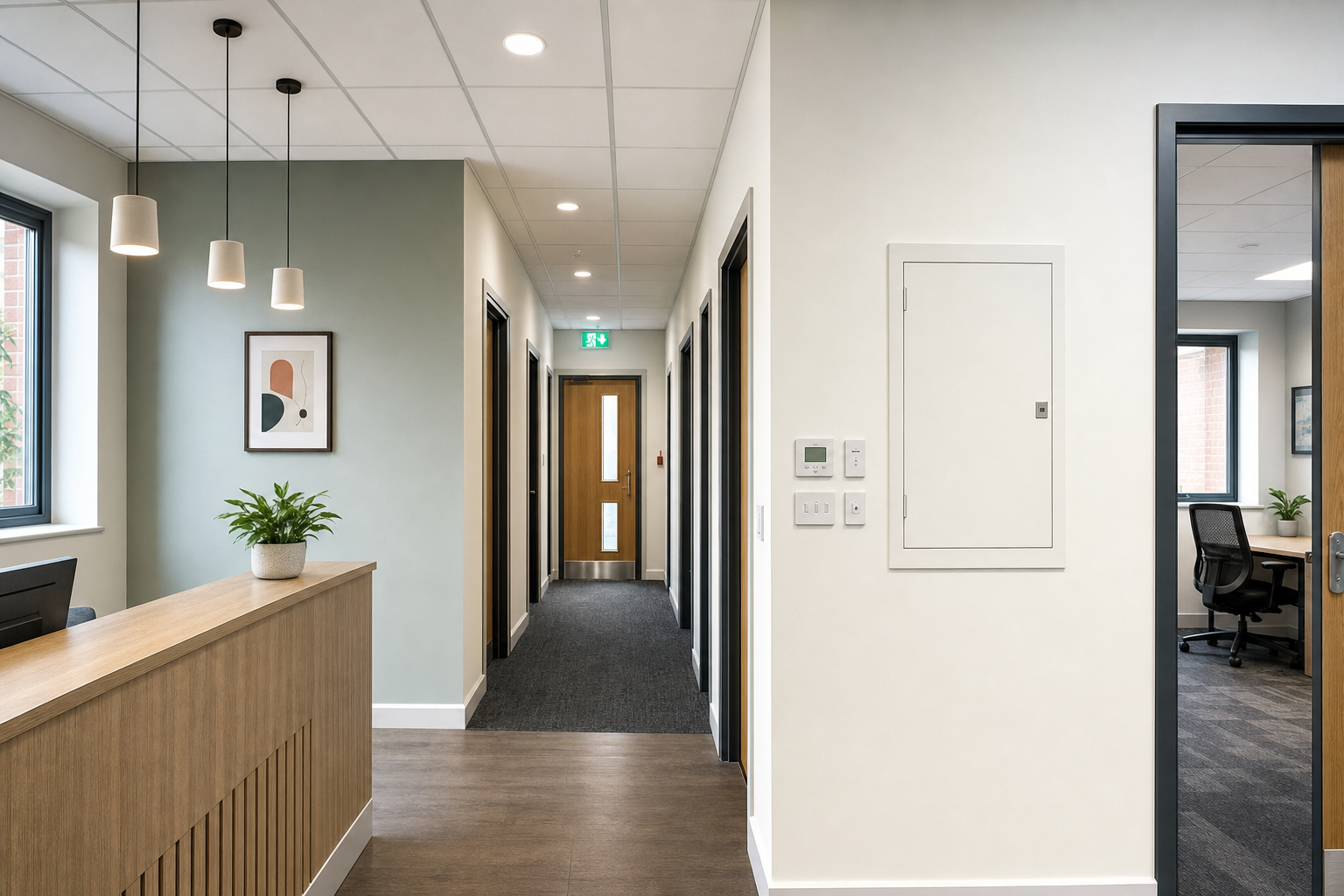
Keep wear and repeat faults from taking over
Planned and reactive cover
Known assets can be checked routinely, while failed components can be repaired when needed.
Built around existing systems
Maintenance is aimed at the installation you already have, not a fantasy site that does not exist.
Recurring work made simpler
Contracts help organise repeat visits and condition-led tasks across working premises.
Planned care for existing installations
Commercial premises do not usually fail all at once. More often, fittings start to tire, controls misbehave, repairs repeat and small faults nibble away at the day until they finally force themselves to the front. With Paul Willis Electrical Ltd, commercial electrical maintenance covers planned checks on existing installations as well as reactive repairs when something stops working. We can look after lighting, accessories, controls, distribution equipment and visibly deteriorating components. In Bradford, that helps stop recurring issues turning into avoidable interruption or wider damage.
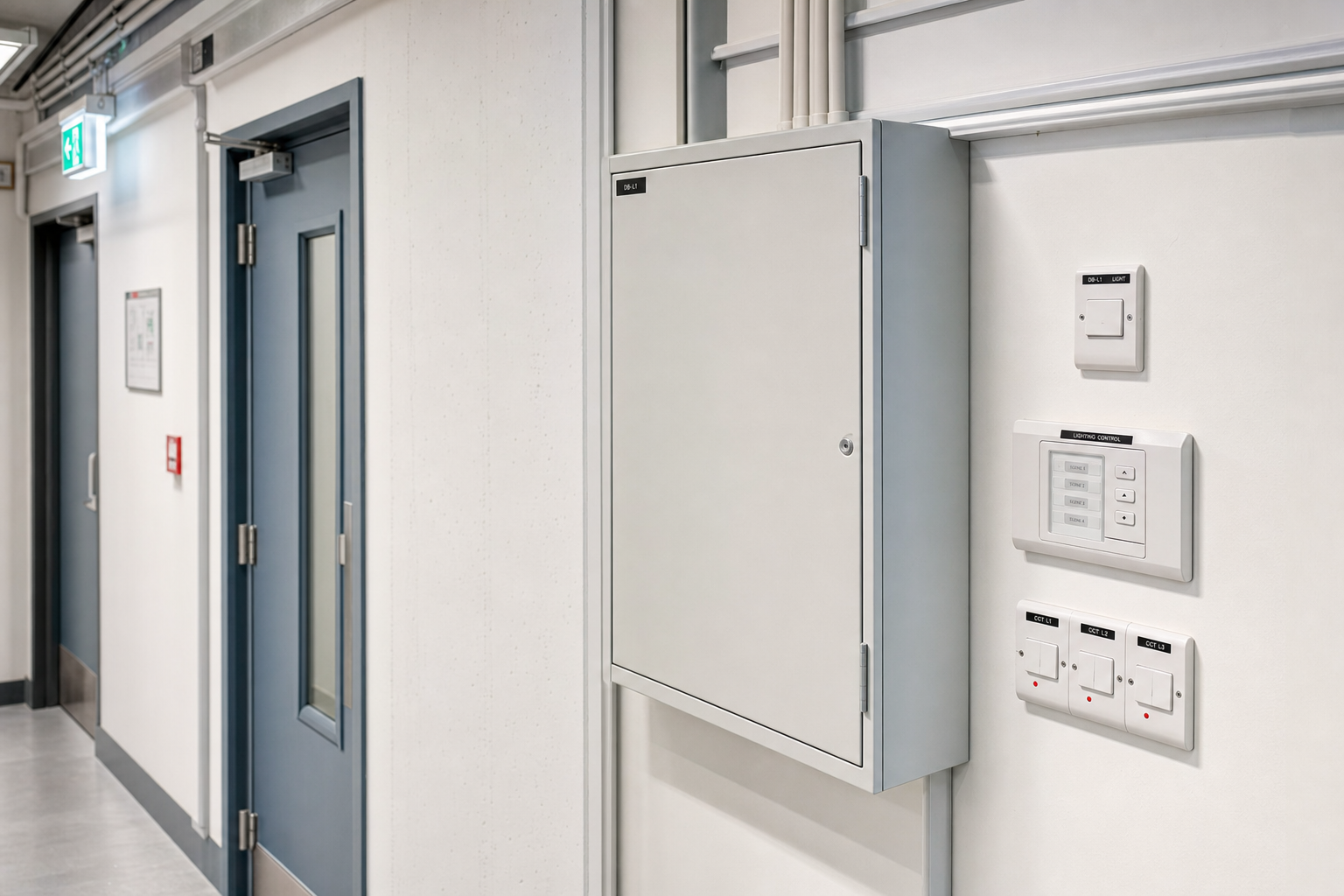
Maintenance priorities based on real use
Not every part of a premises matters equally at the same time. Choosing Paul Willis Electrical Ltd means maintenance priorities are shaped by fault history, equipment condition, usage and how important each part is to the way the site operates. Maintenance contracts can help organise recurring checks and necessary work across active premises, so you are not scrambling from fault to fault with no plan. The result is steadier control over the installation and fewer nasty surprises at awkward moments.
Frequently asked questions
What is the difference between maintenance and repair?
Maintenance is planned work on known assets or parts of the installation to manage condition over time. Repair is reactive work after something has failed. Most commercial sites need a sensible mix of both rather than relying on one alone.
What can a maintenance contract include?
It can cover recurring checks and necessary work on items such as lighting, controls, accessories, distribution equipment and visibly deteriorating parts of an existing installation. The exact scope depends on the premises and how it is used.
How do you decide what should be dealt with first?
We look at fault history, equipment condition, how heavily an area is used and how important that part of the system is to day-to-day operations. That helps us focus attention where a failure would cause the most trouble.